Nordic Summer University, Circle 7: Reflections, research and work explored during the three-year research project.
Paper contributed: Fallen Woman (pp 47-53) can be read here
Nordic Summer University, Circle 7: Reflections, research and work explored during the three-year research project.
Paper contributed: Fallen Woman (pp 47-53) can be read here
Position paper, published in 2025, can be read – here.
Studies in the Maternal, Special Issue: Affect, Creativity and the Maternal.Volume 15, Issue 1 2025

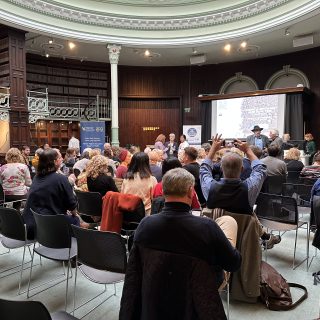
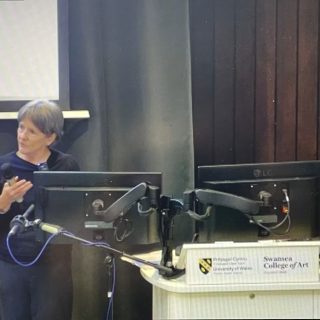
This public symposium held at MAC to accompany the major exhibition, Acts of Creation: On Art and Motherhood (Hayward Gallery Touring, curated by Hettie Judah, programmed with Melanie Stidolph and Sally Butcher.). Six panelists addressed experiences of (m)otherhood, including infertility, involuntary childlessness, maternal grief, and caring for chronically ill children, alongside film screenings and audience Q&A.


An amazing week of presentations and workshops that marked the end of a 3-year cycle. I was fortunate to join Artistic Research, Circle 7, in Helsinki in February, with a weekend of workshops and presentations. (see previous news item). It was full of rich and nourishing conversations with members of the other Research Circles as well as an opportunity to present my latest work and research.
I took my stone – chosen or did it choose me – from the Garw Valley in Sth Wales to Logumkloster and left it there. There was a stream, that ran in the grounds of the place we were all staying at, beckoned. So my stone, full of secrets that I had told it and it told me, began its onward journey. I wish you all the best stone. Onward journey


NSU Summer Session, Løgumkloster, Denmark – I will be presenting work and leading a workshop ‘Set in Stone’.
The Study Circles meet twice a year and explore diverse topics within the arts and humanities, natural and social sciences and provide a cross-disciplinary forum for debating topics and contributing to the initiation of new research.
During one week in the summer all of the circles hold their symposia at a shared location, this time Logumkloster, which offers additional possibilities for cross-fertilisation, to share and be in dialogue with participants research.


Essay by Lizzie Lloyd – artist, writer and researcher – to accompany solo exhibition.
Notes on another kind of suspension
You started with the ground, by digging a hole. It is only recently that have you spoken
about grief as the feeling that the ground beneath you has fallen. Your words strike me:
falling flat, fallen, fallen woman, falling around, fall down, fall short, fall from grace, fall
apart, fall to pieces, free fall.
What happens when a fall is paused, the moment stretched out in suspended animation.
The awareness of ground and air – and the distance between – becomes heightened.
Breath is held. There’s something of this in your work, like a slow-motion negotiation
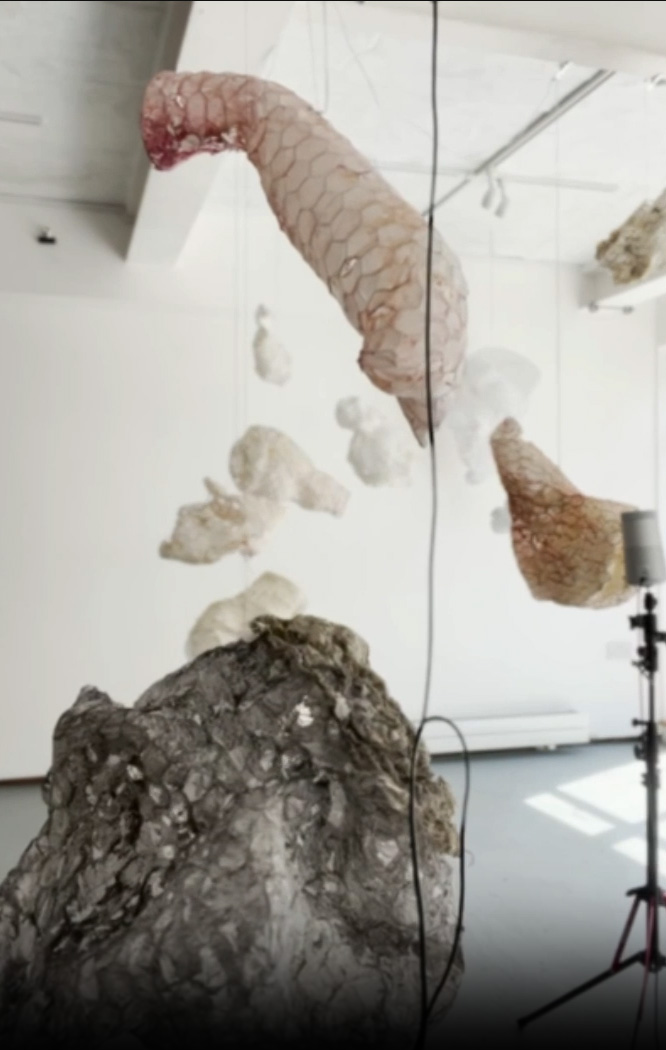
between air and ground: you dig down; you build fabric contraptions to hold wet earth aloft;
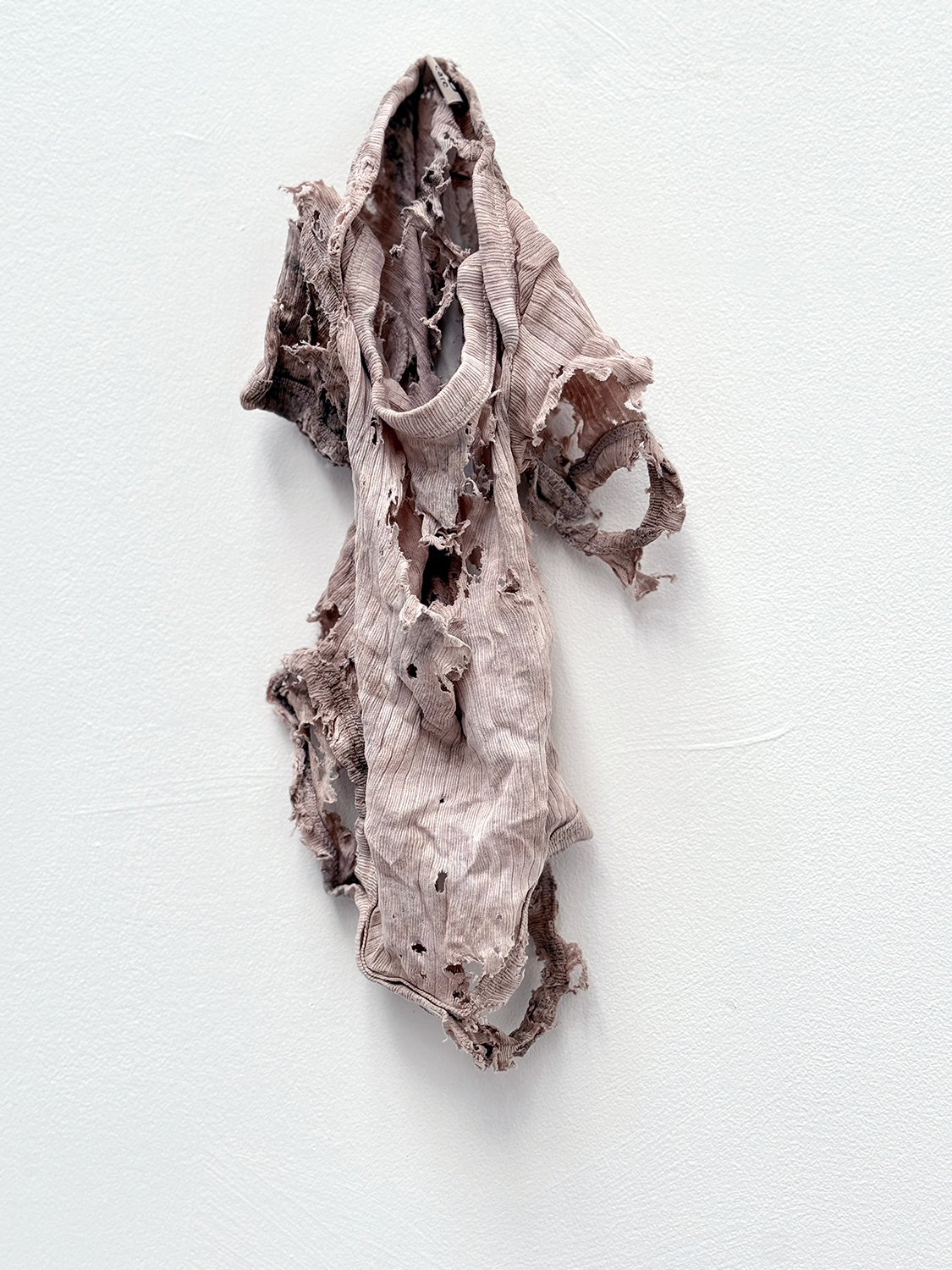
you dangle paper-thin forms, reminiscent of body parts, which twist to and fro on currents
of air pivoting on the axis of barely visible threads; you knot tights that are weighed down,
stretched by clumps of earth; you turn gabions (usually used by civic planners to hold back
the earth) into emptied cage-like monuments to something past. And where you stand
now, in the Garw valley at the centre of the South Wales coalfields, is where it all began.
You describe it as landscape in limbo.
Another kind of suspension.
…
I felt my way, you said, making work that is bigger than me. But it is also of you and from
you and in you and around you. Does that make it all about you? Not only that.
Prepositions matter. You’re not looking at yourself from the outside, but dwelling in (and
on) yourself from the inside in relation to the outside, and in (and on) the outside in relation
to the inside. These boundaries spill over. They’re a leaky mouthful. ‘The world and I
reciprocate one another’, David Abram says.
‘The landscape’, he goes on, ‘as I directly
experience it is hardly a determinate object; it is an ambiguous realm that responds to my
emotions and calls forth feelings from me in turn’.i Such reciprocity is even more
emotionally charged for your work which starts with a small rectangle of earth that, as you
put it, shares my DNA.
I like to leave an impression, you say. You leave footprints and handprints, sloughing off
your dead skin, sifting and sieving and stirring and rubbing an amalgam of oozing mud
pies. This is your way of not just leaving your impression but seeking out ways to be
impressed upon (it works both ways). The encounter collects under your fingernails, tracks
along your fine lines and drips down your throat. These are mouthfuls of internalised and
externalised bodily knowing.
Back to ground again.
…
There is an intimacy in all this, but also, in its fragmentation, alienation. Body parts are
only partly that. These abstracted resemblances are belly-like, breast-like: not fully belly,
not fully breast. Your intimacy with this earth stems from your alienation from it, from
experiences that happened here. Your body, I imagine, has for many years been in limbo.A beautiful, painful, word that is neither here nor there. It comes from the Latin limbus
meaning edge or border and is related to limes, meaning a path or border, and also limb
(‘with intrusive b’, my dictionary of etymology reminds me). I hold it in my mouth and feel
the vibration of my lips as the hum left by that ‘intrusive b’ lingers.
…
In recent years something has changed. You no longer shy away from the intensity of all
this. You’ve talked about the harm of over 40 years of what you call ‘disenfranchised grief’,
a term you borrow from Melanie Klein. I’m taken by the etymology of this word too (how
one thing leads to another): ‘dis’ denoting ‘a lack of’ and ‘enfranchise’ which comes from
the French ‘to set or make free’ and means ‘to grant someone the status or privilege of
citizenship’. I’m stunned to think of grieving as a privilege – what choice do we have? But
when the option to show your grief – to touch it, to enter it, to share it, to recognise it, to
express it (like milk), to somewhat understand it – isn’t made available by the people
around you who hold more power than you, then what? We’ve talked about how it feels to
make art that stems from such a difficult personal and ongoing experience, and how it
feels to feel good about yourself and the work that you’re making now. To find pleasure in
difficulty isn’t paradoxical though, or masochistic. You remind me of Audre Lorde who
wrote ‘The erotic is not a question only of what we do; it is a question of how acutely and
fully we can feel in the doing’.ii
The liberation of feeling fully stems from being able to speak of that which you feel and yet
there is a long tradition of dismissing women who write or make work from their personal
experiences. They’ve often been labelled ‘over-sharers’. In the West we have been
socialized to consider the rational and the cerebral as more valuable, more serious, than
the emotional and the bodily. Work made in this latter mode is deemed confessional, as
navel gazing (what’s wrong with looking at your navel?! you cry). In a recent interview,
sent to me by a friend, poet and writer Anahid Nersessian argues that artists and writers
who are women, gender non-conforming, or of colour, are always being called on to
declare their personal experiences as a statement of legitimacy. She says: ‘there is often a
demand made on […] anybody who comes from a population that is not historically given a
large or highly visible cultural platform, to produce their biography as an authentication of
their right to speak, and preferably to give as much detail as they can about an experience,
particularly if the experience has been hard or traumatic’.iii But for you, the silence imposed
on you over the years has generated a sense of disempowerment that you will no longer
tolerate: as D.W. Winnicott tells us ‘It’s a joy to be hidden and disaster not to be found’ iv.
The point is to have the power to decide.
…
You’ll notice that I have only circled around your story. This wasn’t my intention but it’s
interesting to see it happening, of its own accord, since much of our conversation these
past months has turned on how the difficult experiences that have precipitated your recent
work make themselves known to us, your audience. How explicit and specific or indirect,
even opaque, need those experiences be? Sometimes we’ve likened it to leaving the door
ajar, an invitation for others to enter. But we’ve also talked about feeling a sense of
responsibility to stay with the difficulty, to confront our discomfort. Is it about how we talkabout it? How we name it? It’s not mine to name, though, so I continue to circle, tiptoe,
inadvertently slip and slide as I witness grief gathered, distilled, and rehydrated. A series of
infinite ands, you call it. Claustrophobic, contaminated, and reanimated, these infinite ands
are alive with the promise of feeling fully.
Another kind of suspension.
Lizzie Lloyd 2023
i David Abram, The Spell of the Sensuous. Perception and Language in a More-than-human World (New
York: Vintage Books: 1996)
ii Audre Lorde, ‘Uses of the Erotic: The Erotic as Power’, originally presented at the Fourth Berkshire
Conference on the History of Women, Mount Holyoke College, August 25, 1978
iii Anahid Nersessian interviewed by Hannah Zeavin, ‘“I speak only of myself”: Anahid Nersessian On Keats,
Feminism, and Poetry’, https://www.publicbooks.org/i-speak-only-for-myself-anahid-nersessian-on-keats-
feminism-and-poetry/ (accessed 23 March 2023). Thank you to Bryony Gillard for pointing me here.
iv Quoted in Melissa Febos, Body Work: The Radical Powers of Personal Narrative (Manchester: Manchester
University Press, 2022)

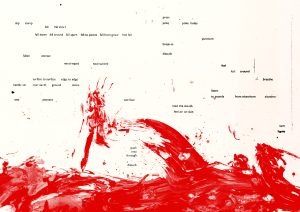
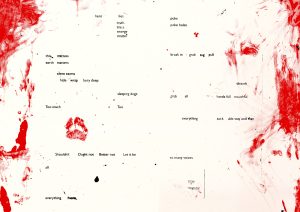
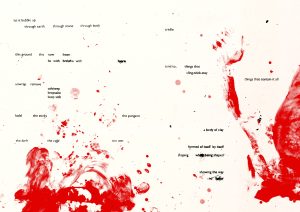
I began a visual diary to document my Arts Council funded project, but it soon became much more that. These pages, which I am still continuing, trace the unfolding of an embodied practice and the unexpected discoveries that emerge when materials and process take the lead.

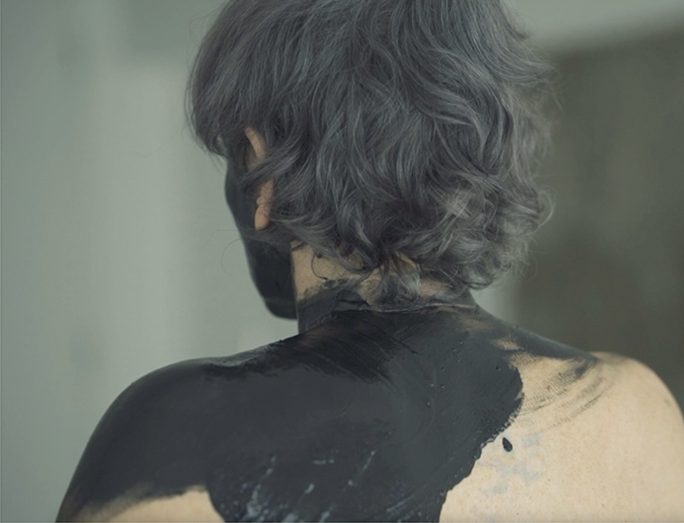
Thank you to the Brigstow Institute, for their support for this project, and enabling me to work so closely with Ass. Professor Lesel Dawson (University of Bristol) and Julian Brigstocke (Cardiff University). Being in the valley and talking with them both about experiences that were way in my past and fresh in the moment, was so valuable. Our journey is all here –What it is to be there (PDF)
This project was made possible by the support of Arts Council England and the Brigstow Institute.
Please see list of resources at the end of the document that offer support following the death of a child.


Spent a wonderful day, in the Garage feeling our way with clay. Jen Hawthorn is a ceramic artist whose work is both performative and object orientated.
I wanted to work with Jen because she is also working intuitively with clay, exploring the relationship between herself and this active and generative material. I wanted to learn from someone experienced in ceramics and performative work to ‘let go’ some more.


Honoured to talk at the launch of the new Unesco Hub at the University of Sth Wales, alongside a member of the Yogi from Columbia, about what we can learn from the E(e)arth as indigenous people.
Thank you to Dr. Luci Attalia (Director, Unesco-Bridges UK) and Professor Louise Steel (Associate Director, Unesco-Bridges UK).

13th Oct: ‘Get down and dirty’ – a workshop I led at The Garage, for researchers and academics to experience thinking with the body and what that might mean. Organized with Professor Louise Steel & Associate Professor Lesel Dawson, to brainstorm ways we could collaborate on a future funded project.
Thanks to Jude Allen of https://soilvoices.org, one of the participants of the workshop, for making this video .





23 – 30 July: Residency at Garw Valley, South Wales.
Invited artists: Gina Baum (ceramicist), Prerna Chandiramani (print maker) We spent a week absorbing the changes and what it is to be there, sharing experiences, stories, practices.
We found wild clay in a nearby farm and processed it; made land art; recorded our walking together on lino; collected evidence of exchange. Afterwards we spent a week in the Garage thinking about the residency, working with the clay and printing.

This is essential work – an open-access intersectional feminist exhibition initiated by academics, mothers, creators Michal Nahman (UWE, Bristol) and Susan Newman (Open University).
This inaugural exhibition drew artists together from all over the world. I was so delighted to be included in this mother/artist open call.. to enter and to be included in the maternal space.
A big thank you to the selectors.. this means a lot.
thisisessentialwork.com/helenacklam
LIMB O:
The Arts Council England funding has enabled me to work with some great artists and different practices to develop my work and ways of thinking. I’ve been spending studio time with Matteo Amadio & Tommy Cha – and this month we brought ‘them’ to life.
Such a thrill.. to walk in the room, stir the air and hear what they had to say.

Applicant Project Name:What it is to be there
Like all of us, I get many rejections.. so to receive this funding was so special and vital. My ideas for the next 8 months were rubber-stamped, as I was granted a ring-fenced piece of time to just let go and see what happens. My thanks to Arts Council England, and to Mark Devereaux of MDP for his help with the application and on-going mentoring.